
Applications
Continuous moisture data from the material — from screed to existing concrete.
Screed drying — digital moisture monitoring
Pilot phaseMake covering readiness plannable with continuous in-material data
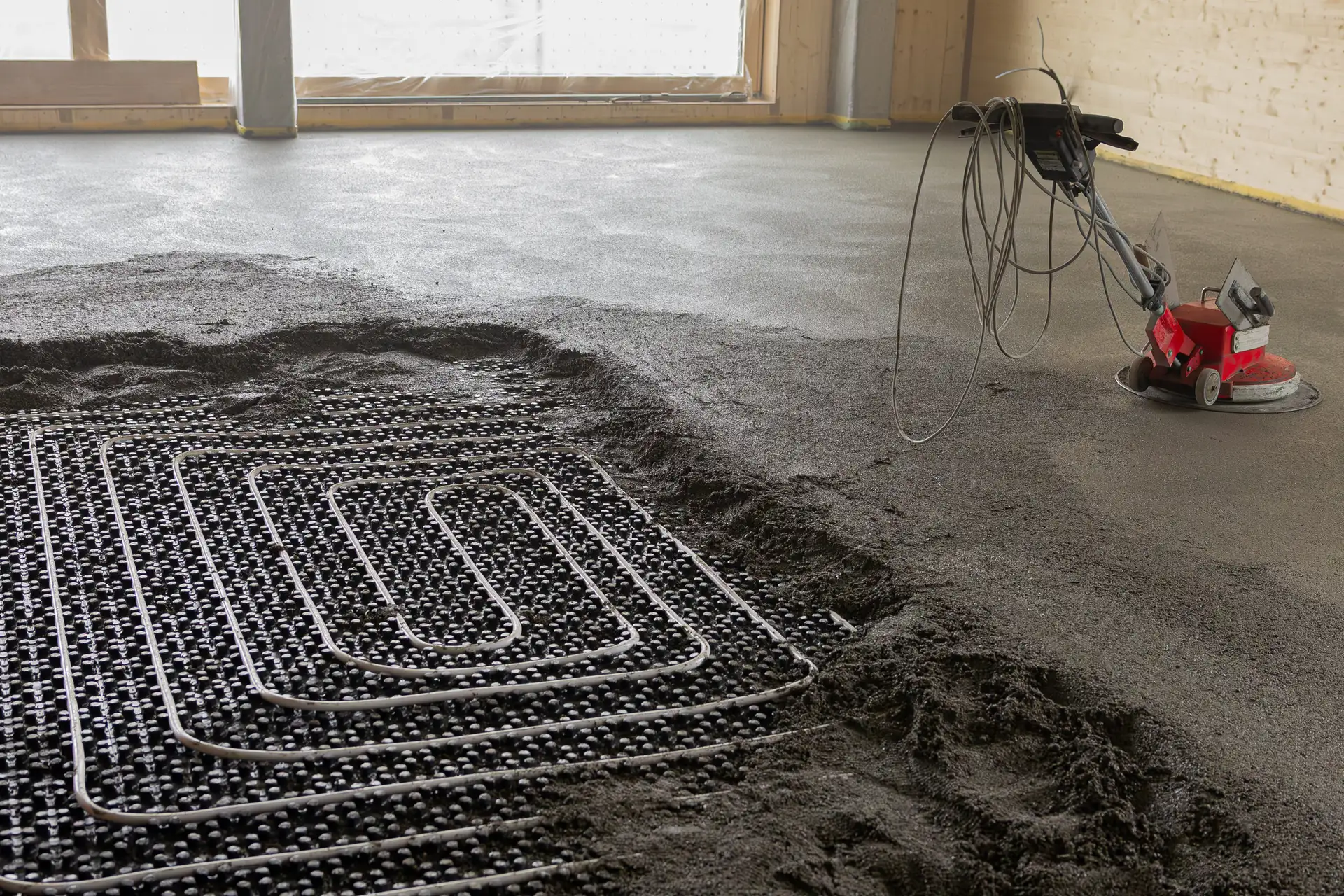
AntOne measures temperature and moisture directly inside the screed and transmits continuously by radio through the material. Ventilation, underfloor heating and drying rate can be controlled based on measured values; anomalies trigger alerts.
Key benefits
- Reduce drying uncertainty with continuous in-material data
- Control ventilation and heating based on measured values
- Reduce delays and document accountability across trades

What the sensor sees
Re-enacted course of a screed project: drying, re-wetting in humid room air, forced-heat drying, CM test, floor covering – and a water ingress two and a half years later. The sensors stay in the building element.
Screed dryingLeak detection · 2nd floor
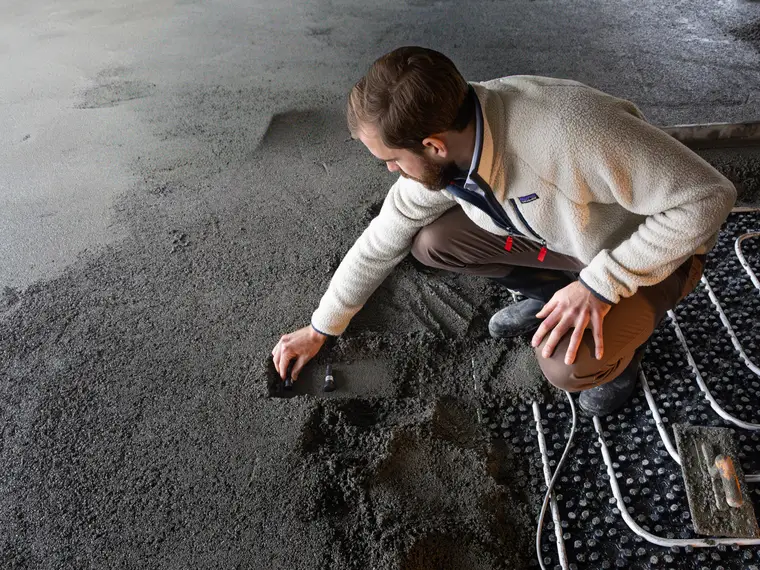
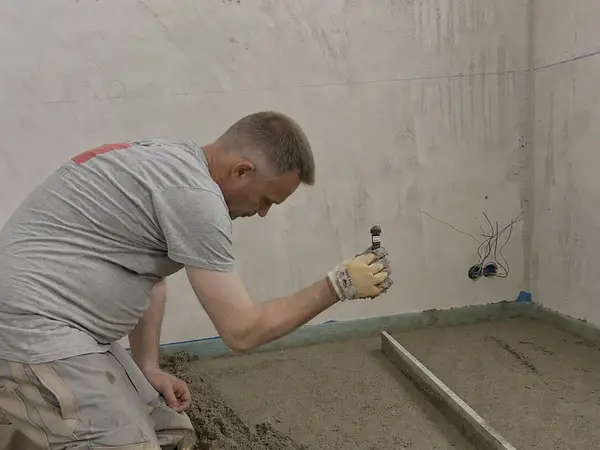
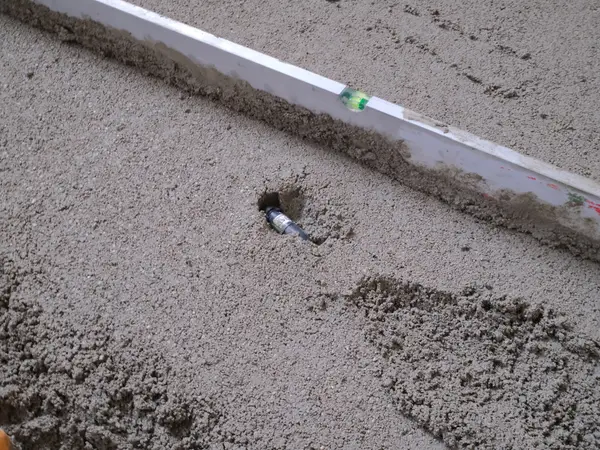
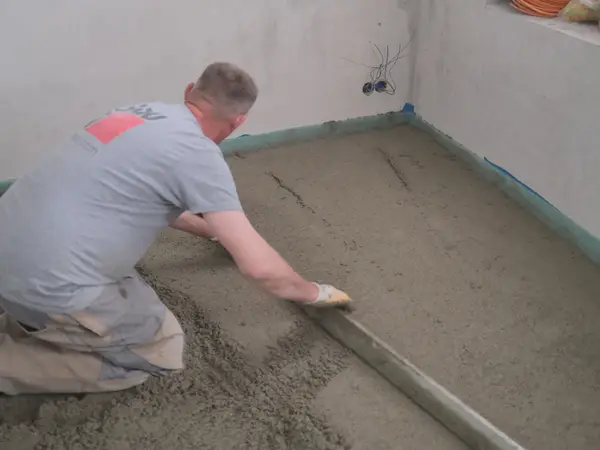
Semi-dry cement screed
Flowing screed
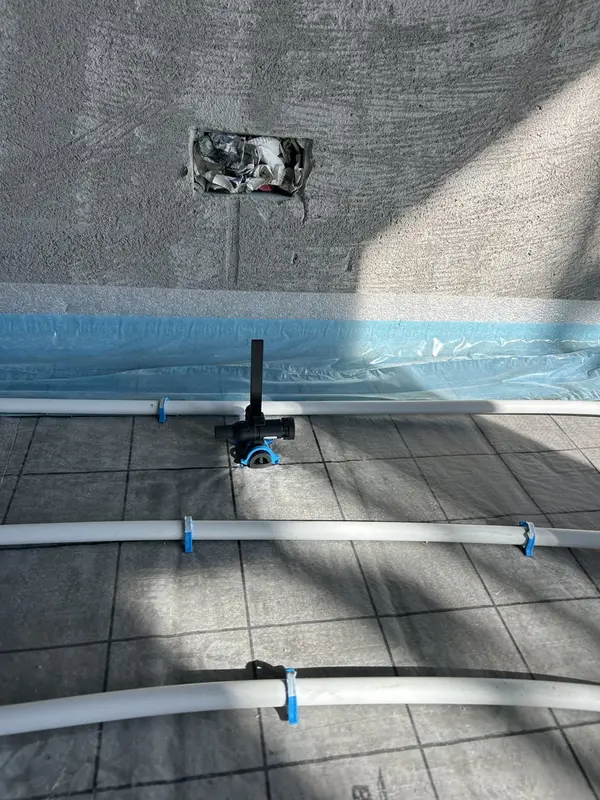
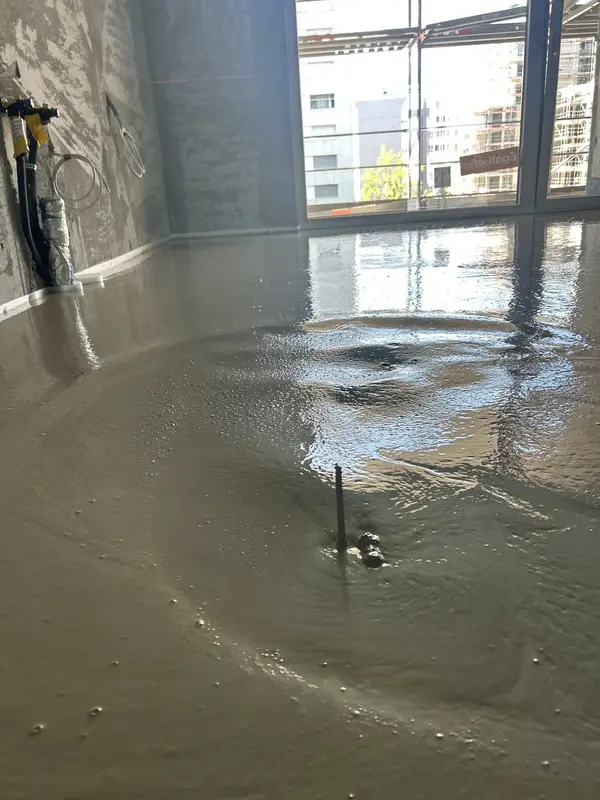
In flowing screed the sensor would float. A holder therefore fixes it at the intended measuring height; its tip is clipped at the screed surface if necessary.
Moisture monitoring in concrete elements (existing)
Pilot phaseContinuously measure the moisture curve in existing concrete — before refurbishment, waterproofing or covering
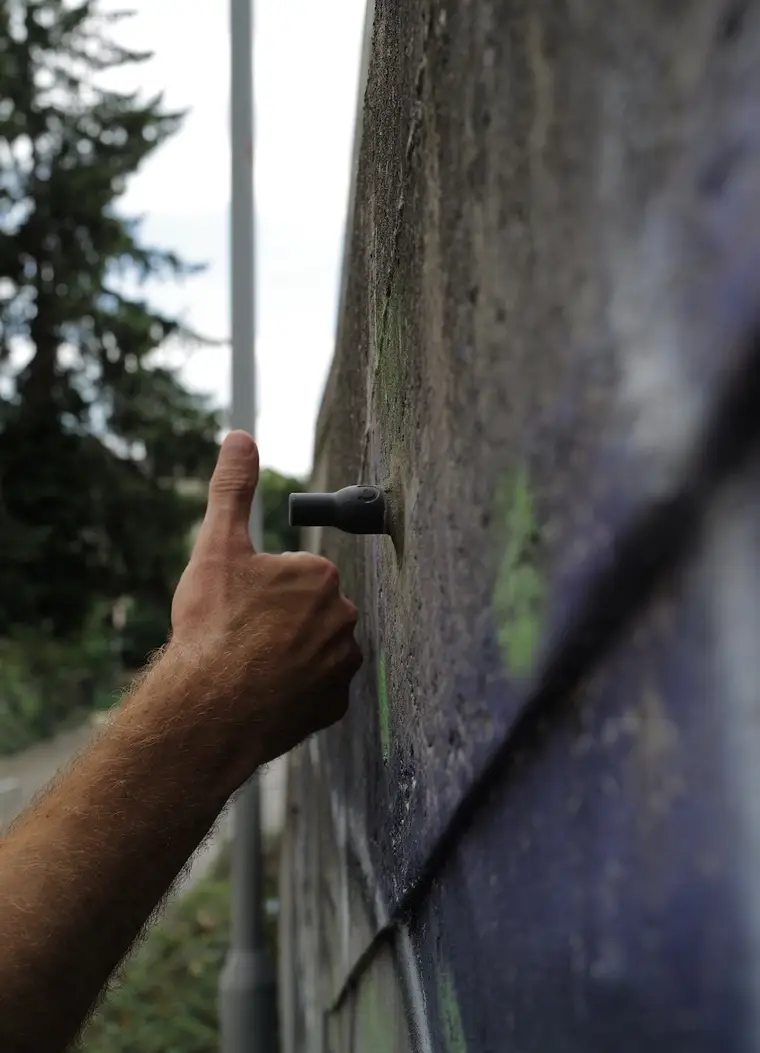
The sensor is retrofitted with a minimally invasive step: it is set into the measuring point and transmits through the material — continuous moisture and temperature data without cables and without a permanently open measuring point.
Key benefits
- Before refurbishment or waterproofing: a solid data basis instead of a single measurement
- Covering existing concrete: documented readiness
- After water damage: a drying record as evidence for owners and insurers
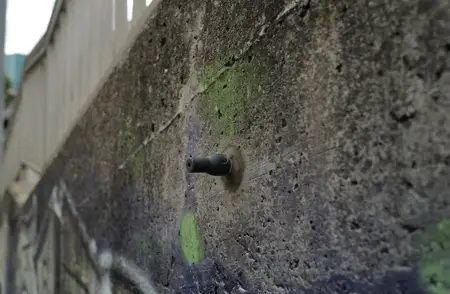
Leak detection & assessment
Early moisture intelligence for existing buildings
Detect hidden leaks early, locate affected zones faster and build a reliable data basis before refurbishment.
Plaster & render monitoring
Completion control for finishing work
Track the moisture curve in plaster to schedule coatings and sanding safely and to avoid premature finishing work.
What your digital building physicist delivers
Early warning instead of late consequences
Detects remoistening and drying that isn't going to plan early — before it becomes damage.
Active recommendations
When to ventilate and when not to, when a CM test makes sense — plus a covering-readiness forecast.
Control of drying heating
Monitors the heating phase and warns of improper execution.
Seamless evidence trail
Time-stamped documentation across the entire warranty phase — errors traceable, a solid record in case of dispute.
Leak localisation after installation
Locates leaks based on the moisture curve inside the component.
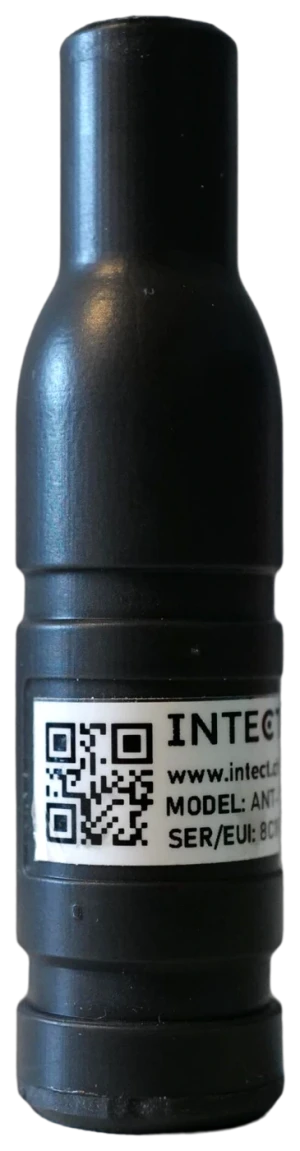
The sensor
AntOne
Moisture and temperature sensor for screed and concrete — fully embedded, transmits through the material.
AntOne is currently used exclusively in supervised pilot projects.
What is measured
- Material temperature & moisture
- Directly inside the component, continuously.
- Room climate
- Temperature and humidity as reference.
- Nearest weather station
- Outdoor climate feeds into the evaluation.
- Drying forecast
- Expected curve up to covering readiness.
- Alerts
- On stagnation, condensation risk or renewed rise.
Who it's for
Screed layers
Evidence for your own work: the documented curve proves proper installation and drying — even years later.
Site managers / GC
Control over deadlines and liability: detect disruptions early, base decisions on measured data, delineate responsibilities cleanly.
Architects & clients
Documented certainty in the project records: the seamless moisture history as part of acceptance and warranty documents.
Know when your screed is ready for covering.
Continuous moisture monitoring for your site — test it in a pilot project.
Request a pilot project